
The Science Behind WeBe®
Built with state-of-the-art physiological signal algorithms & neural networks.
From raw photoplethysmography (PPG) waveforms to blood pressure estimation (developing), explore the biomedical engineering driving continuous monitoring.
Biomedical Sensor Modalities & Signal Pipelines
Explore our validated mathematical formulations, peer-reviewed dataset benchmarks (WESAD, MIMIC-II), and deep learning architectures.
Heart rate, heart rate variability, SpO2 monitor
PPG uses photoelectric sensors to detect the difference in reflected light intensity after absorption by human blood and tissues, trace the changes in blood vessel volume during the cardiac cycle, and calculate the heart rate from the obtained pulse waveform. WeBe band is equipped with 4 channels of PPG signals (green*2, IR and red) which offers accurate and stable measurement of the raw PPG signal.
Photoplethysmography (PPG) signals captured from the wrist are rich in physiological information, but they are also highly sensitive to motion, environmental noise, and changes in skin contact. At Health-eTile, we transform raw PPG into clean, analysis-ready signals through a robust, transparent signal-processing pipeline designed for clinical research.
Our pipeline begins with raw, unfiltered PPG acquisition, ensuring full data fidelity and traceability. We then apply a sequence of preprocessing steps, including band-limited filtering to isolate the cardiac frequency range, motion-artifact suppression using synchronized inertial sensor data, and adaptive baseline correction to compensate for slow drift caused by temperature and perfusion changes.
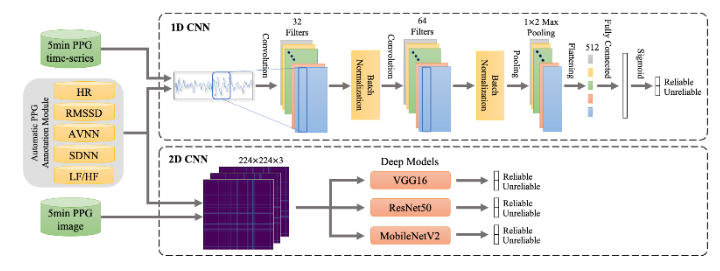
Deep-learning model for automatic PPG signal-quality assessment.
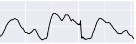
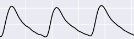
Raw wrist PPG before and after the signal-processing pipeline.
Unfiltered wrist acquisition: motion artifacts, baseline drift, and erratic amplitude distortion.
Filtered signal with motion artifacts suppressed and baseline corrected.
Emotional and arousal feedback from sweat gland activation.
Electrodermal activity is one of the most sensitive forms of emotional feedback, originating from the spontaneous activation of sweat glands in the skin. It is closely related to mood, arousal, and attention, and is the most widely used type of measurement in the physiological response system. At the same time, because of its high stability, simple measurement, and high sensitivity, it has become the most effective and sensitive physiological parameter to reflect changes in individual sympathetic nerve excitability.
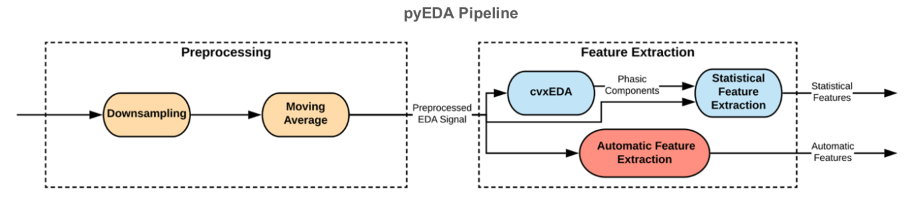
We have integrated pyEDA into our WeBe platform. pyEDA is an open-source Python toolkit for EDA signal preprocessing, statistical analysis and automatic feature extraction.
pyEDA is widely used and has been verified on different existing datasets such as WESAD.
Raw electrodermal signals undergo downsampling and moving average preprocessing, followed by convex optimization (cvxEDA) to separate phasic skin conductance response from tonic levels, feeding dual extraction modules.

Blood pressure estimation on WeBe® (developing).
Developing, not yet a product feature: WeBe is developing a deep learning method based on a cycle generative adversarial network (CycleGAN) to reconstruct the entire ABP waveform using a PPG signal. In cross-subject evaluation on the MIMIC-II dataset, the research model achieved a prediction error MAE±σ of 2.89±4.52 mmHg and 3.22±4.67 mmHg for SBP and DBP, respectively.
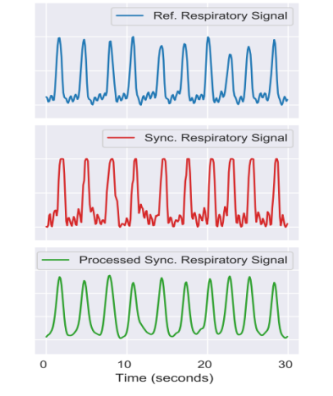
We deployed state-of-the-art PPG-based respiratory rate estimation algorithms.
Respiratory rate is an important vital sign especially during the pandemic. However, it is difficult to measure RR. WeBe platform integrated an automatic RR estimation algorithm to extract RR from PPG signal.
WeBe® band is equipped with the most advanced machine learning-based stress detection model.
Daily life stress has become a significant issue for modern society and it is ubiquitous. The mismatch between job demands and abilities, time pressure and high workloads, family-related issues, illnesses are all causes of stress. In recent years, researchers have validated that stress can be monitored by physiological signals and machine learning. WeBe integrates these state-of-the-art algorithms and provides accurate real-time stress evaluation.
WeBe technologies and HealthFM algorithms are engineered for clinical investigations, IRB-backed study deployments, translational medical research, and exploratory vital-sign monitoring. No diagnostic or medical device clearance claims are made unless a specific clinical indication receives formal regulatory authorization.